
What we do
We are dedicated to transforming the lives of teenage mothers by providing them with the support, care, and opportunities they need to rebuild their lives and secure a better future for themselves and their children.
Community Advocacy and awareness program that addresses harmful cultural practices, stigma, and gender inequality through dialogue forums, campaigns, and stakeholder engagement.
Main activities of Advocacy program
a. Community Dialogue & Learning Forums
Purpose: Challenge harmful norms through respectful, inclusive discussion.
Intergenerational Dialogue Circles
Facilitate guided discussions between elders, youth, women, and men on cultural
practices, gender roles, and human rights.
• Men and Boys Engagement Forums
Create safe spaces for men and boys to reflect on masculinity, gender equality, and their
role in ending harmful practices.
• Women’s Storytelling Sessions
Survivors and community champions share lived experiences to humanize the impact of
stigma and inequality.
• Faith and Culture Reflection Dialogues
Engage religious and traditional leaders to reinterpret cultural and faith teachings that
promote dignity and equality.
b. Community Awareness Campaigns
Purpose: Shift attitudes and norms at scale.
• Community Theatre & Role-Play Performances
Use participatory drama to depict harmful practices and positive alternatives, followed by
audience discussions.
• Radio Talk Shows and Call-In Programs
Host local-language broadcasts on gender equality, stigma reduction, and legal rights.
• Advocacy Days & Community Marches
Organize events on international or national days (e.g., International Women’s Day) to
raise visibility and solidarity.
• Door-to-Door Awareness Outreach
Trained volunteers share messages, distribute materials, and engage households in
dialogue
c. Youth-Led Advocacy Initiatives
Purpose: Empower young people as change agents.
• Youth Advocacy Clubs
Establish school- or community-based clubs focusing on gender equality, stigma
reduction, and leadership.
• Creative Arts for Advocacy
Support youth to produce poems, music, murals, or short films addressing harmful
practices.
• Peer Education Programs
Train youth advocates to educate peers on gender rights, consent, and social inclusion.
d. Stakeholder Engagement & Policy Advocacy
Purpose: Strengthen systems and accountability.
• Community Stakeholder Roundtables
Bring together local government, health workers, educators, police, and civil society to
coordinate responses.
• Traditional and Religious Leader Dialogues
Facilitate commitments from leaders to publicly denounce harmful practices and promote
positive norms.
• Policy Awareness Workshops
Educate communities on existing laws and policies related to gender-based violence,
child protection, and equality.
e. Community Awareness & Stigma Reduction
Goal: Strengthen acceptance and emotional support in the wider community.
Activities
• Community Dialogues on Mental Health
Educate communities about emotional wellbeing and the importance of support.
• Anti-Stigma Campaigns
Use drama, testimonies, and radio messages to normalize counseling and seeking help.
• Engagement of Religious & Cultural Leaders
Encourage leaders to promote compassion and guidance for vulnerable girls.
f. Monitoring, Reflection, and Learning
Purpose: Track change and improve programming.
• Community Feedback Forums
Regularly gather community perspectives on changing attitudes and remaining
challenges.
• Most Significant Change Stories
Collect and document personal stories showing shifts in beliefs or behavior.
• Participatory Review Meetings
Engage stakeholders in reviewing progress and adapting strategies.
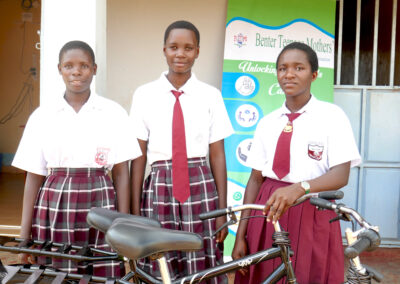
School retention and re-entry initiative – supports teenage mothers and vulnerable girls to remain in or return to school by advocating for re-admission, conducting follow-ups, and addressing barriers such as poverty, childcare, and discrimination.
a. Re-admission Support
Purpose: Ensure schools comply with re-entry policies and create a welcoming environment.
• Engage school administrators and education authorities to advocate for the re-admission
of teenage mothers.
• Support girls with school re-enrollment documentation and negotiations with school
leadership.
• Establish school-based focal persons (e.g., teachers or counselors) to support re-entry
cases.
b. Case Management and Follow-Up
Purpose: Prevent dropouts and support sustained school attendance.
• Identify teenage mothers and vulnerable girls through community mapping and referrals.
• Conduct home visits to assess individual barriers to school attendance.
• Develop individualized re-entry and retention plans for each girl.
• Track attendance, performance, and well-being through regular follow-ups.
• Create referral pathways to social services, health care, and child protection services.
c. Economic and Material Support
Purpose: Address poverty-related barriers to education.
• Secure scholarships to pay tuition fee of teen mums from poor families
• Provide school supplies (uniforms, books, sanitary pads, bags).
• Offer conditional cash transfers or school stipends tied to attendance.
• Support income-generating activities for teenage mothers or caregivers.
• Link families to existing social protection programs and scholarships.
• Facilitate school fee waivers or subsidies where applicable.
d. Childcare and Parenting Support
Purpose: Enable teenage mothers to balance education and caregiving.
• Establish community-based or school-linked childcare support systems.
• Partner with local daycare providers for subsidized childcare services.
• Organize parenting skills and early childhood development sessions.
• Encourage family and caregiver involvement in childcare arrangements.
• Provide breastfeeding-friendly spaces where feasible.
Counseling to offer safe spaces where girls receive emotional care, life skills, and guidance from trained
counselors and positive role models to build confidence and resilience.
a. Establishing Safe Spaces for teen mums
Goal: Create trusted, confidential environments where teen mums feel safe and supported.
Activities
• Regular Safe Space Group Sessions
Organize regular small-group meetings for teenage mothers and vulnerable girls in
community halls, churches, or CBO offices.
• Age- and Need-Based Grouping
Separate groups for younger adolescents, older girls, and teenage mothers to allow
targeted discussions.
• Confidentiality & Safeguarding Protocols
Develop and enforce clear guidelines on privacy, consent, and child protection.
• Mobile Safe Spaces
Conduct outreach sessions in villages to reach girls who cannot travel.
b. Counseling & Emotional Support Services
Goal: Support girls to heal from trauma, stigma, and emotional distress.
Activities
• One-on-One Counseling Sessions
Provide individual counseling with trained counselors or social workers.
• Group Counseling & Therapy
Facilitate guided group discussions on grief, shame, rejection, and stress management.
• Trauma-Informed Care Sessions
Address experiences of abuse, violence, early pregnancy, and loss.
• Referral Pathways
Refer severe cases to professional psychologists, hospitals, or child protection services.
c. Life Skills & Resilience Building
Goal: Build confidence, self-esteem, and coping skills.
Activities
• Life Skills Workshops
Cover topics such as decision-making, goal setting, communication, self-care, and
problem-solving.
• Sexual & Reproductive Health Education
Provide accurate information on body changes, contraception, consent, and healthy
relationships.
• Stress & Anger Management Training
Teach techniques like breathing exercises, journaling, and peer support.
• Confidence-Building Activities
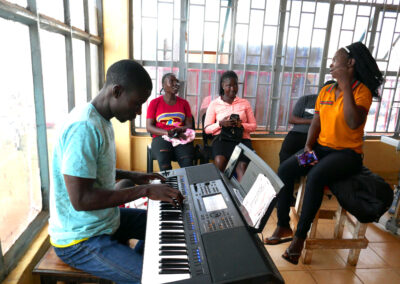
Use debates, storytelling, art, music, and sports to help girls express themselves.
d. Mentorship & Positive Role Models
Goal: Inspire girls through guidance and lived experience.
Activities
• Mentor–Mentee Pairing
Match girls with trained female mentors such as teachers, nurses, businesswomen, or
former teenage mothers.
• Role Model Talks
Invite successful women from the community to share their journeys and lessons.
• Peer Mentorship Program
Train older or more stable teenage mothers to support new participants.
• Career Guidance Sessions
Introduce girls to education and career pathways beyond early motherhood.
A care and protection program that supports the holistic wellbeing of teenage mothers and their children through
referrals to health services, parenting support, and community-based care networks.
a. Identification, Registration & Case Management
Goal: Ensure every teenage mother and child receives appropriate, continuous support.
Activities
Community Outreach & Identification Work with village elders, chiefs, and health workers to identify teenage mothers and at risk children.
• Confidential Registration & Case Profiling
Develop individual case files capturing health, education, protection, and social needs.
• Individual Care Plans
Create tailored care and protection plans for each mother–child pair.
• Regular Case Follow-Ups
Conduct home visits and check-ins to monitor wellbeing and emerging risks.
b. Health Services Referral & Follow-Up
Goal: Improve access to maternal, child, and reproductive health services.
Activities
• Referral to Maternal & Child Health Clinics
Link mothers and children to antenatal, postnatal, immunization, and nutrition services.
• Sexual & Reproductive Health Referrals
Refer teenage mothers to family planning, STI testing, and HIV services.
• Nutrition Screening & Support
Link malnourished children to nutrition programs.
• Health Follow-Up Tracking
Monitor appointment attendance and treatment adherence.
c. Parenting Skills & Early Childhood Development (ECD)
Goal: Strengthen caregiving skills and promote child development.
Activities
• Parenting Skills Training Sessions
Train mothers on infant care, breastfeeding, hygiene, and positive parenting.
• Early Childhood Stimulation Sessions
Teach play-based learning, bonding, and early stimulation techniques.
• Father & Caregiver Engagement
Engage young fathers (those who can be available), grandparents, and caregivers in
parenting education.
• ECD Center Linkages
Link children to ECDE centers and early learning programs
d. Community-Based Care & Support Networks
Goal: Build strong, local support systems for teenage mothers.
Activities
• Mother-to-Mother Support Groups
Create peer support groups for sharing experiences and advice.
• Community Care Volunteers
Train trusted community members to provide basic support and follow-up.
• Buddy Support System
Pair new teenage mothers with experienced caregivers or mentors.
• Faith & Women Group Engagement
Partner with churches, mosques, and women’s groups to support vulnerable families.
e. Child Protection & Safeguarding
Goal: Protect mothers and children from abuse, neglect, and exploitation.
Activities
• Child Protection Awareness Sessions
Educate mothers and communities on child rights and protection.
• Reporting & Referral Mechanisms
Link cases of abuse or neglect to children’s officers, police, or legal aid services.
• Safe Parenting Practices Training
Teach non-violent discipline and safe caregiving.
• Safeguarding Policies & Training
Ensure CBO staff and volunteers follow child protection guidelines.
f. Socio-Economic & Basic Needs Support
Goal: Reduce vulnerability caused by poverty.
Activities
• Basic Needs Support
Provide or link to food aid, baby supplies, clothing, and hygiene kits.
• Livelihood & Skills Referrals
introduce teen mums to vocational training or savings groups.
• Financial Literacy Training
Teach budgeting and household financial management.
g. Family Reintegration & Mediation
Goal: Strengthen family and community acceptance.
Activities
• Family Counseling & Mediation
Facilitate dialogue between teenage mothers and families to reduce rejection.
• Community Dialogue Forums
Address stigma, discrimination, and shared responsibility for child care.
• Male Engagement Sessions
Involve young fathers and male relatives in caregiving responsibilities.
Talent nurturing and skills development programs, identifying and developing talents in Music, sports, creative
arts, and leadership while providing vocational training, entrepreneurship skills, and livelihood opportunities.
a. Talent Identification & Mapping
Goal: Discover talents and interests among teenage mothers and girls.
Activities
• Talent Discovery Days
Organize community events where girls showcase singing, dancing, poetry, drawing,
sports skills, and leadership abilities.
• Skills & Interest Assessments
Conduct simple assessments and interviews to identify talents, passions, and career goals.
• Community Referrals
Work with schools, youth leaders, coaches, churches, and cultural groups to identify
talented girls.
• Talent Profiling & Registration
Create individual talent and skills profiles for program participants.
b. Music, Performing & Creative Arts Development
Goal: Build creative skills and self-expression.
Activities
• Music & Dance Training Sessions
Partner with local musicians and trainers to offer vocal, instrumental, and traditional
dance training.
• Creative Arts Workshops
Provide training in drawing, painting, beadwork, fashion design, tailoring, and crafts.
• Drama & Spoken Word Clubs
Use drama and poetry to build confidence and address social issues.
• Community Performances & Exhibitions
Organize shows, exhibitions, and cultural days to showcase talents and reduce stigma.
c. Sports & Physical Development
Goal: Promote teamwork, health, discipline, and leadership.
Activities
• Sports Clubs & Training
Form football, netball, athletics, and indoor games teams for girls and teenage mothers.
• Coaching & Fitness Sessions
Engage volunteer coaches for regular training and fitness activities.
• Sports for Life Skills Workshops
Integrate leadership, teamwork, and goal-setting into sports training.
• Friendly Matches & Tournaments
Organize inter-community games to build confidence and exposure
d. Leadership & Personal Development
Goal: Build leadership capacity and confidence.
Activities
• Youth Leadership Training
Conduct workshops on communication, advocacy, decision-making, and teamwork.
• Girls’ Leadership Clubs
Create clubs where girls practice leadership roles and organize activities.
• Public Speaking & Debate Sessions
Build confidence in expression and community engagement.
• Peer Leadership Opportunities
Appoint trained girls as peer educators, mentors, or group leaders.
e. Vocational Skills Training
Goal: Equip participants with employable skills.
Activities
• Vocational Training Referrals
Link girls to local TVETs, polytechnics, and artisans for training in tailoring,
hairdressing, catering, carpentry, mechanics, and ICT.
• Short-Course Skill Trainings
Organize on-site training in soap making, baking, poultry rearing, agribusiness, and
handicrafts.
• Apprenticeship & Attachment Programs
Place girls with local businesses for hands-on experience.
• Certification Support
Assist with registration and exam fees for recognized courses.
f. Entrepreneurship & Business Skills
Goal: Enable income generation and self-reliance.
Activities
• Entrepreneurship Training Workshops
Teach business planning, customer care, marketing, pricing, and record keeping.
• Financial Literacy Training
Train on savings, budgeting, mobile banking, and loans.
• Business Mentorship
Pair girls with local entrepreneurs for guidance.
• Market Linkages & Product Showcases
Support participation in trade fairs, markets, and exhibitions.
g. Livelihood Support & Economic Empowerment
Goal: Support sustainable income opportunities.
Activities
• Startup Kits & Tool Support
Provide tools or starter kits for trained skills (e.g., sewing machines, salon kits).
Savings & Loan Groups (Table Banking)
Organize participants into savings groups to support business growth.
• Linkages to Grants & Youth Funds
Support access to government and donor funding opportunities.
• Collective Enterprises
Support group businesses in catering, crafts, farming, or entertainment.
h. Partnerships & Exposure Opportunities
Goal: Expand opportunities through collaboration.
Activities
• Partnerships with Artists, Coaches & Trainers
Engage local talent professionals as mentors.
• Collaboration with Schools & Youth Centers
Share facilities and training opportunities.
• Media & Social Media Promotion
Promote girls’ talents through local radio, community events, and online platforms.
• Exposure Visits & Talent Camps
Organize visits to studios, sports academies, or cultural centers.
Current Projects
Learn about the initiatives we are currently working on to support teenage mothers in Busia.
Past Projects
A look at the projects we have completed and the impact they have had on the community.
No Results Found
The page you requested could not be found. Try refining your search, or use the navigation above to locate the post.
100% of all funds collected go directly toward funding our programs
Every contribution helps restore dignity, inspire hope, and create real opportunities for teenage mothers to rebuild their lives.
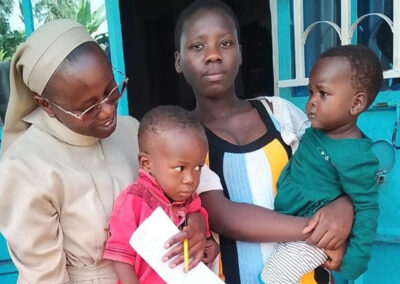
We’ve Supported 90 teenage mothers and their children with essential supplies and care.
We’ve Provided emotional and psychological support to 103 plus teenage mothers.
We’ve equipped 100 teenage mothers with vocational skills in sewing and beauty hairdressing